How to Prioritize Tasks: A Step-by-Step Guide For Productivity

Have you ever found yourself staring at a to-do list so long it feels impossible to tackle? Do you struggle with deciding which tasks to focus on first, or feel overwhelmed by the sheer volume of things you need to do? You're not alone. Learning how to prioritize tasks effectively can make all the difference in boosting your productivity and reducing stress. But how exactly do you go about it?
In this article, we’ll explore the best strategies to help you prioritize tasks like a pro. By the end, you’ll be equipped with actionable techniques to manage your workload more efficiently and accomplish your goals with confidence.
Why Is Prioritizing Tasks So Important?
Effective task prioritization is at the core of time management. Without it, you might end up spending hours on low-impact tasks that don’t contribute to your main objectives. Prioritizing ensures that you focus on what truly matters, reduces decision fatigue, and helps you make consistent progress toward your goals.
How to Prioritize Tasks: The 4 Key Strategies
1. The Eisenhower Matrix: Urgent vs. Important
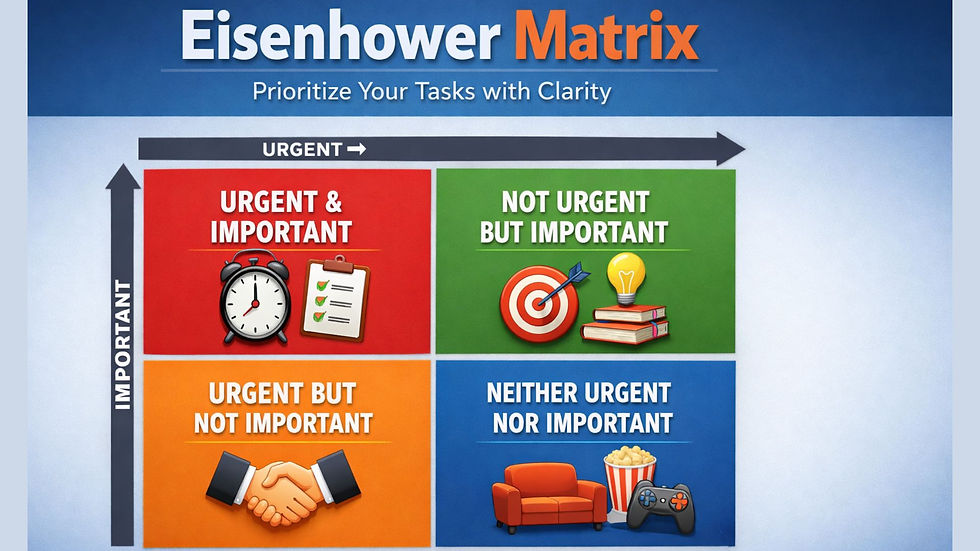
One of the most popular methods for prioritizing tasks is the Eisenhower Matrix. This tool helps you categorize your tasks into four quadrants:
Quadrant 1: Urgent and Important – Tasks that need immediate attention. Do these first.
Quadrant 2: Not Urgent but Important – Tasks that contribute to long-term goals. Schedule these.
Quadrant 3: Urgent but Not Important – Tasks that demand attention but don’t necessarily align with your main goals. Delegate if possible.
Quadrant 4: Neither Urgent nor Important – Tasks that are low-priority. Eliminate or minimize these.
By using this matrix, you can quickly assess what requires your attention right away and what can be deferred or delegated, making it an excellent framework for prioritizing tasks.
2. The ABCDE Method: Classifying Your Tasks
Another effective technique is the ABCDE method. This system breaks your tasks down into five categories:
A: Very important Tasks – they must be done today or tomorrow.
B: Important tasks – they should be done soon, but aren’t as critical as A tasks.
C: Nice-to-have tasks – tasks that would be nice to complete but don’t have any real consequences if they’re left undone.
D: Tasks to delegate – these can be passed off to someone else.
E: Tasks to eliminate – tasks that don’t serve any purpose and should be removed from your list.
By classifying your tasks this way, you can quickly decide what needs your attention the most, helping you focus on high-value actions and prioritize tasks that lead to the best outcomes.
3. Time Blocking: Focusing on One Task at a Time

Time blocking is an approach that involves setting specific blocks of time for each task. Instead of trying to multitask, you focus on one task during its designated time period. This method minimizes distractions and allows you to dive deep into your work.
To use time blocking effectively:
Identify your most important tasks for the day.
Assign specific time blocks for these tasks.
Avoid switching between tasks during a block.
By allocating dedicated time to each task, you’ll be able to improve your focus, minimize procrastination, and complete tasks more efficiently.
4. Pareto Principle (80/20 Rule): Focus on the Vital Few
The Pareto Principle suggests that 80% of your results come from just 20% of your efforts. When it comes to prioritizing tasks, this principle can be a game-changer. Identify the tasks that will give you the highest return on investment (ROI) and focus your energy on them.
For example, if you're working on a project, focus on the 20% of the tasks that will directly impact the productivity report. Don’t waste time on trivial activities that won’t significantly contribute to your overall goal.
How to Prioritize Tasks: Tips for Effective Execution
Know Your Deadlines: Clear deadlines can help you assess the urgency of a task. Prioritize tasks with firm deadlines first.

Break Down Larger Tasks: Breaking big tasks into smaller, actionable steps makes them less daunting and easier to prioritize.
Stay Flexible: Be prepared to reassess your priorities if new tasks or information come up. Prioritization isn’t set in stone.
Review Daily: At the start or end of each day, review your tasks and re-adjust priorities based on changing circumstances.
You can also watch: EmpCloud: One Platform for All Your Workforce Needs!
Summary: Mastering Task Prioritization
How to prioritize tasks is essential to improving productivity and ensuring that you’re working smarter, not harder. Whether you use the Eisenhower Matrix, the ABCDE method, time blocking, or the Pareto Principle, there are many effective strategies you can apply to prioritize your tasks.
By evaluating the urgency and importance of your tasks, you can focus your energy on what truly matters and eliminate distractions. The key is to consistently review your priorities, stay organized, and be mindful of how you’re spending your time.
Frequently Asked Questions (FAQ)
Q1: What is the best way to prioritize tasks when everything feels urgent?
Use the Eisenhower Matrix to distinguish between what’s truly important versus what feels urgent. Tasks that are both urgent and important should come first, but if they aren’t essential to your main goals, consider delegating or postponing them.
Q2: How do I deal with tasks that I find unimportant but still need to complete?
If a task is not critical but still necessary, consider delegating it or finding a more efficient way to handle it. Use the ABCDE method to assess its level of importance and schedule it for a time when you have fewer high-priority tasks.
Q3: Can time blocking help with procrastination?
Yes! Time blocking helps reduce procrastination by creating a clear schedule and setting aside uninterrupted time for each task. This method minimizes distractions and allows you to focus solely on one task at a time.


Comments